

self employed
How it works
To legally live and work in Spain as your own boss, non-EU/EEA citizens must apply for a self-employed (autónomo) visa. This visa allows you to open and operate a business or freelance in Spain. Here’s how it works:
Business Plan Approval: You must present a detailed business plan proving your idea is viable, beneficial, and realistic, with enough detail and all points properly covered.
Consulate Application: All applications begin in your home country’s Spanish consulate, requiring in-person appointments and original documents, in some cases must be done in third countries, but it’s pretty unlikely.
Work Authorization & Visa: If Spain’s Immigration Office approves your business plan, you’ll be granted authorization. Then, the consulate issues your visa, and you can move to Spain to begin working.
Benefits & Drawbacks
Advantages
Spain offers a rapidly growing economy and a very open society where international projects often receive strong support from the local community. Additionally, you can rely on all health and education services at a low cost or for free.
- Legal residency in Spain as an entrepreneur.
- Run your own business in a chosen location and industry.
- Eligible to apply for a TIE card (residency ID).
- And many benefits depending on your background.
Disadvantages
Despite its advantages, the process can be complex and time-sensitive. Applicants must navigate strict documentation, long waiting periods, and post-arrival bureaucracy.
- Complex documentation: business plan, translations, apostilles, etc.
- Long processing times (1–3 months for approval).
- Requires proof of income and startup capital.
- And certain challenges may vary based on your background.
Documentation Required
Here are the standard documents required to apply for a self-employed visa in Spain. Requirements vary by consulate and applicant’s country of origin:
Proof of sufficient financial means
Bank statements, savings, guarantees showing you can sustain yourself and your business.
Academic/professional certificates
Translated if not in Spanish. To prove qualifications.
Visa application form
Duly filled and signed. May vary by consulate.
Criminal record certificate
From all countries lived in during last 5 years. Apostilled/legalized and translated into Spanish.
Private health insurance
From a Spanish-recognized insurer, covering all risks.
Detailed business plan
With market analysis, financials, funding origin, employment impact, and client interest.
Step-by-Step Process Overview
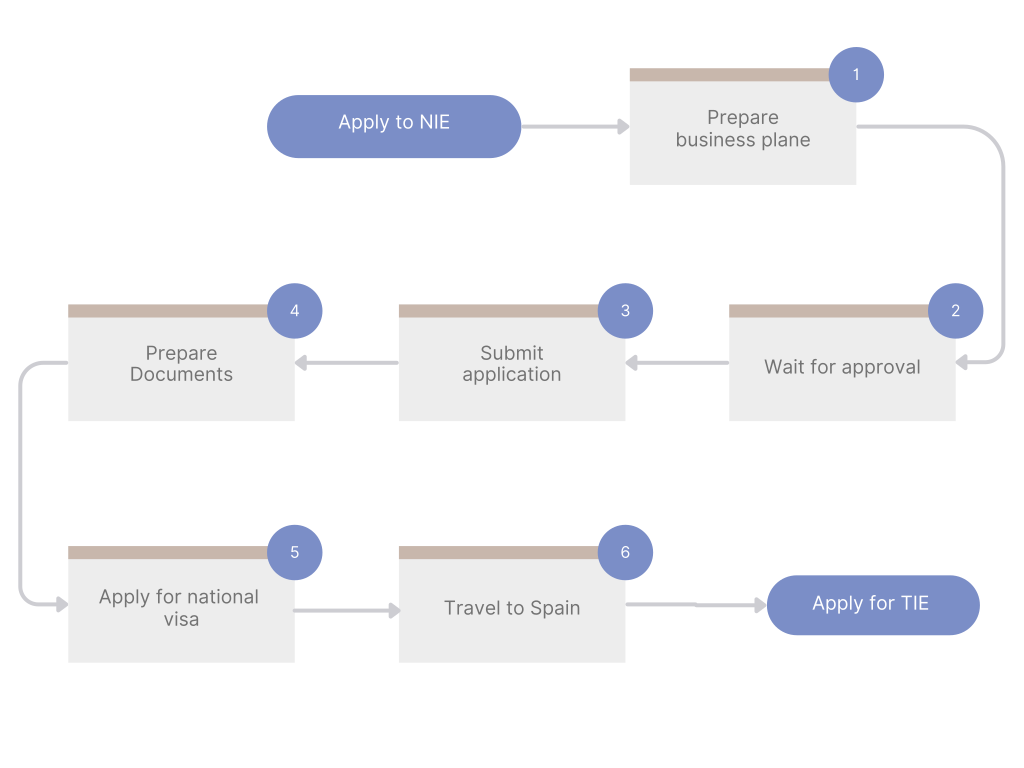
This visual guide walks you through each step of the process in a simple and easy-to-understand way. It shows how everything fits together, so you always know what’s happening and what to expect next.
Ready to start your visa journey?
Contact us today to schedule a consultation or to learn more about our services.